Posted: 31 Mar 2016 07:38 AM PDT
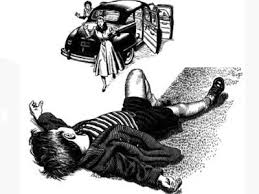
SC okays Centre’s norms to protect Good Samaritans
By-standers and passers-by
who render help to victims of road accidents will not be unnecessarily
harrassed, with the Supreme Court giving its nod to government’s
guidelines to shield good samaritans from harassment at the hands of
cops and other authorities.
A bench of justices V
Gopala Gowda and Arun Mishra said the “Good Samaritans should feel
empowered to act without fear of adverse consequence” while helping
others at times of distress.
“People have the notion
that touching the body could lend them liable for police interrogation.
Passer by plays safe and choses to wait for the police to arrive whereas
the injured gradually bleeds to death.
“People are reluctant to
come forward for help despite desperate attempts to get help from
passers by, (who) by and large they turn a blind eye to the person in
distress…,” the bench said.
It further said there was a
need to evolve a system by promptly providing effective care system
with certain ethical and legal principles.
“It is absolutely
necessary that Good Samaritans feel empowered to act without fear of
adverse consequence. There is need to provide certain incentives to Good
Samaritans…”, the bench said.
It said the scheme framed
by the government and this court order be widely published for the
benefit of public, so that “the public is made aware and that serves as
impetus to Good Samaritans to extend timely help and protection
conferred upon them without incurring the risk of harassment”.
“It is apparent that
guidelines and directions can be issued by this court including a
command for compliance of guidelines and standard operating procedure
(SOP) issued by Government, Ministry of Road Transport and Highways,
till such time as the legislature steps in to substitute them by proper
legislation…,” the court said, adding it should be complied by the Union
Territories and state governments.
The court’s order came on a
PIL filed by an NGO SaveLife Foundation in 2012 asking for
comprehensive protection for Good Samaritans from legal hassles in order
to create a conducive environment for people to help injured persons on
the road.
The apex court had set up a committee to identify the
The apex court had set up a committee to identify the
root causes for fear of
harassment and legal hassles in public regarding helping injured victims
and sought evolving of guidelines to protect Good Samaritans from
police harassment and legal hassles.
Later, the concerned
ministries’ views were also sought by the apex court, with Ministry of
Road Transport and Highways stating that the recommendation made in the
committee’s report regarding protection of good Samaritans has been
accepted by them as also by Ministry of Law and Justice.
Taking note of the
notifications of the Centre, the bench said, “The affidavit of Good
Samaritan if filed, shall be treated as complete statement by the police
official while conducting the investigation. In case statement is to be
recorded, complete statement shall be recorded in a single
examination”.
The guidelines provide
that a bystander or Good Samaritan shall be suitably rewarded or
compensated to encourage other citizens to come forward to help the road
accident victims. They shall not be liable for any civil and criminal
liability.
It had further said that a
samaritan who makes a phone call to inform the police or emergency
services for the person lying injured on the road, shall not be
compelled to reveal his name and personal details on the phone or in
person.
The committee, also
comprising former Secretary of Road Transport Ministry S Sundar and
Nishi Mittal, ex-chief scientist, had given 12 major recommendations
including setting up of State Road Safety Councils, evolving a protocol
for identification of black spots, their removal and monitoring to see
the effectiveness of the action taken.
The Centre had earlier
said that in the absence of any statutory backing, it was proving
difficult to enforce these guidelines. Hence, it had approached the apex
court to consider issuing these guidelines, through an order binding on
all states and union territories, till the Centre enacted a law to this
effect.
( Source – PTI )


No comments:
Post a Comment